
On this page
- Two Devices, Two Anchor Points
- How a Chastity Belt Actually Works
- The One Thing a Belt Does That a Cage Cannot
- About the Image in Your Head
- What a Belt Costs, and How Long You Wait for It
- Measuring for a Belt Is Not Measuring for a Cage
- Living in One : Sitting, Sleeping, and the Toilet
- Keeping a Belt Clean
- Cage, Belt, or Both
- A Belt Is the Right Answer for You If
- A Cage Is the Right Answer for You If
- One Hour, Sitting Down
- Frequently Asked Questions
You have the tab open, darling. A steel belt, photographed on a body that is not yours, and you have closed and reopened that tab for a week now without letting yourself click. Part of you wants the thing that cannot be taken off. Part of you suspects you are about to spend a month’s rent on a fantasy. And nobody has told you the one fact that would settle it, so you keep circling.
Here is the fact. A belt and a cage are not two prices for the same object. They answer two different questions, and once you know which question is actually yours, the decision takes about ninety seconds.
Let me be exact about what I am, before I tell you anything. I keep a sissy in a cage. I have never locked a belt onto her, and I am not going to write you a page that pretends I have. So this article is two kinds of knowing, and I will tell you which one you are reading as we go. The cage half is mine, five years of it, two devices in rotation, every mistake made in my own house. The belt half is other people’s, gathered carefully, sourced, and marked as theirs.
Two Devices, Two Anchor Points
A chastity belt is a band that closes around the waist or the hips with a shield or a second band running between the legs, so the device is held on by your skeleton. A chastity cage is a tube held on by a single ring that sits behind the scrotum, so the device is held on by the body it encloses. Everything else, every difference in price, in comfort, in security, in how long you wait for delivery, comes out of that one sentence.
The belt pattern has a name, the Florentine, a band at the waist plus a shield down between the legs. Serious modern ones are made in 316 stainless steel, and if the material question is the one keeping you up, it is a different article: resin, steel and silicone change the practice in ways worth reading about, and that decision comes after this one, not before it.
The cage does something the belt does not, and it is worth saying plainly because it is the reason cages won the market. It touches almost nothing. One ring, one tube, no waistband, no strap across the seat. That is why a cage disappears under jeans and a belt does not, and it is also, exactly, why a cage is the easier device to get out of.
How a Chastity Belt Actually Works
Three parts, and the middle one is where the real decision hides.
The waistband is a steel hoop shaped to your hips rather than a strap you cinch. A serious one is a slim, solid band of stainless steel with a little give built into it, and there is more of it against your skin than the product photographs suggest. That is the first honest thing anyone should tell you about a belt: it looks light, and it is not.
The rear is the actual choice, and it is a three-way trade between security and daily life. The configurations that exist across the market come down to three shapes: a continuous steel band that runs under and behind you, a plastic-coated steel cable that sits between the buttocks instead of a band, or a rear left open.
The lock is the simplest part. One padlock, one key, no ring to squeeze anything. A cage asks you to get a ring diameter right or suffer for it. A belt asks you to get a waist and a crotch length right instead, and it forgives about as little.
The One Thing a Belt Does That a Cage Cannot
Here is the sentence that sells every belt ever sold, and it is true.
A cage can be slipped out of while it stays locked. Not always, not by everyone, not without work, but the door exists. One long-term practitioner, a UK man who has been at this fifteen years and owns thirty-seven cages, puts it flatly: “It’s possible to pull out the penis but not remove the device.” He holds that only two configurations are genuinely inescapable, a Prince Albert piercing locked through the glans, or a full belt, which he says are “once properly fitted, inescapable.” He is a wearer with a long practice and a large drawer, not a clinician, and I offer him to you as exactly that.
A cage keeps its promise because you want it kept. A belt keeps it whether you want it or not. Be honest with yourself about which of those two you are shopping for.
That is the whole belt case, and it is a real one. If escape is your actual problem, if the ritual has already failed a few times at two in the morning and you both know it, no amount of steel in a cage fixes an anchor point that sits behind the scrotum. The belt fixes it by anchoring somewhere else.
One disambiguation before you go looking, because a belt search will drag you straight into it: an elastic support strap sold as an anti-escape accessory for a cage is not a chastity belt. It is a strap that stops a cage sagging. Same word, different object, different money.
About the Image in Your Head
The thing your brain pictures when it hears “chastity belt” is a medieval iron object, and it never existed the way you think.
The British Museum, writing about its own example, put it better than I can: “It is probable that the great majority of examples now existing were made in the eighteenth and nineteenth centuries as curiosities for the prurient, or as jokes for the tasteless.” The famous Musée de Cluny belt, attributed for a century to Catherine de’ Medici, was metal-tested in the 1990s and turned out to date from the early nineteenth. Albrecht Classen, whose book on the subject reconstructs the whole myth, notes that “no author of sermon literature, of penitentiary texts, or didactic and legal writers has ever mentioned the chastity belt.” The Crusader husband with the key is a story Europe told itself, much later, about a past it enjoyed being scandalised by.
I raise it only to get it out of your way, sweet thing. Nothing you buy in 2026 descends from that iron. If you want the whole story properly told, it lives in what chastity actually is and where the practice really comes from.
What a Belt Costs, and How Long You Wait for It
This is where most sissies quietly close the tab, so let me save you the week I would have spent finding out.
There is a cheap tier and it is not what you are imagining. Our partner SMBSM keeps off-the-shelf belts from around $25 for a PU leather one up to roughly $130 for a steel belt with a plug or an integrated cage. Those come sized S, M and L rather than measured to your hips, and that matters less than the price gap makes it sound, especially for a first belt. An off-the-shelf one fits a lot of bodies well enough to teach you what a belt actually is and whether you want to keep going, and for most sissies that is exactly the right way in. What you give up is the last bit of comfort and the last bit of security, which you will only start to notice once you have worn one long enough to have an opinion.
Then there is the made-to-measure tier, and it is a different world. That is the belt you buy once you are sure, once you know you keep it on and you know the number you need. A made-to-measure steel belt from a specialist runs from several hundred dollars into four figures, and almost nobody at that level publishes a price at all. You send your measurements, they quote you back. That is not evasiveness, it is simply what bespoke metalwork costs to price, but it does mean you cannot comparison-shop a belt the way you can a cage.
And then the waiting. The cheap off-the-shelf belt ships like anything else. The made-to-measure one takes weeks at the very least and, for a fully custom fit, can run to two or three months. Sit with that. A cage you order tonight is on your body this week. A belt you order tonight arrives in a different season of your life.
Measuring for a Belt Is Not Measuring for a Cage
Two numbers, and neither of them is a number you already know.
A belt asks for two numbers: the hip circumference exactly where the waistband will sit, and the crotch length front to back at penis level. That is it. No ring, no tube length, no gap. If you have been reading our three cage numbers, ring size, cage length and gap, put them down. They belong to a device that hangs off your body, and a belt does not hang off anything.
Anywhere serious gates the sale behind those two measurements, with kits, fittings and appointments. That is the signal I would pay attention to if I were you. The sellers who publish a real fitting guide all say the same thing, which is usually how you know a thing is true.
Living in One : Sitting, Sleeping, and the Toilet
This is the part I have read, not the part I have worn. Read it as such and I will keep it honest.
The one thing I can state flat, because it is mechanics and not health, is the load path. A belt spreads its weight across the waist and the seat. A cage concentrates everything at a single ring. Wearers of each report a different set of complaints, and neither list is short.
Everything past that is other people talking, so I will keep the label on it as I go. The people who sell these belts say you can wear one around the clock, that a good one is waterproof, and that you can use the toilet seated and even sleep in it without much trouble. Those are the claims of people who want you to buy the thing, and I pass them to you as exactly that, not as anything I have confirmed on a body I keep. The long-term wearers add the note the sellers tend to leave out: a belt takes longer to get used to than a cage, especially at night.
Keeping a Belt Clean
Everything I know about keeping a device clean, I learned on a cage, and the belt wearers report a different problem: more surface, more strap, more places for moisture to sit.
The protocol the sellers publish is plainer than you would expect. Warm soapy water, and no bleach or harsh chemicals, because those irritate the skin. Syringe kits exist for flushing the tube through without taking the belt off. And even the people with an interest in telling you it is easy still put the careful line in writing: round-the-clock wear is achievable only when safe, hygienic practice comes with it.
The single most useful hygiene fact I found was a caveat a seller put on its own product. The ventilated tubes, the ones drilled with extra holes for airflow and easier rinsing, come with a warning that the skin can push out through those holes and chafe. Someone telling you the downside of their own upgrade is the kind of seller worth trusting, whoever they turn out to be.
I will not extend our cage routine, the daily unlock and the cool hairdryer, to a belt as though I had tested it there. I have not.
Cage, Belt, or Both
Hybrids exist. Belts come with an integrated cage, and cages come with support straps sold to hold them steady. If you find yourself searching for a cage with a belt, what you probably want is one of those, and you should know it is a real category rather than a compromise nobody makes.
But the honest way to hold this decision is not as a product grid. It is a single question about how much security you actually want in the relationship, and that question does not belong to the shopper. It belongs to the person holding the key. A cage says I will keep this on because she asked me to. A belt says I could not take this off if I wanted to. One of those is a ritual and the other is a fact, and choosing between them is the kind of decision a female-led dynamic exists to make long before any money moves.
If your keyholder has not been asked, ask her tonight. Her answer is the spec sheet.
A Belt Is the Right Answer for You If
This is the honest hearing for the belt, the one the cage sellers never give it, and I mean every line.
If that is you, go buy one, and buy it from a maker who measures you.
And you do not have to start at the top to start at all. If you want to meet the shape before you commit a season and four figures to a custom piece, our partner SMBSM keeps off-the-shelf belts in stock, sized S, M and L. That sizing is the whole reason they cost what they cost, and for a first belt it is a sensible trade: one fits most bodies well enough to teach you what a waistband and a strap feel like all day, and for plenty of sissies it turns out to be enough. If it is not, you will know precisely why, and precisely what to ask the custom maker for.
Browse the chastity belts at SMBSM (Ad. Affiliate link, we may earn a commission at no extra cost to you.)
And yes, that one pays us. I would still rather you began there than spent four figures on a shape you have never worn.
A Cage Is the Right Answer for You If
And here is the answer for almost everybody reading, delivered without any triumph, because it is also the answer that pays me and I want you checking my work.
If you want the maximum security a cage can give, that is a real thing to want and it has a real answer: a rigid steel cage with a ring you have already proved on your own body, like the FRRK Mamba we tested for fifteen days. If you want the one that disappears under clothes and gets worn every day for years, the Holy Trainer V4 is the one my sissy keeps choosing. And if you have not bought anything yet, start where the money is smallest and the mistakes are cheapest.
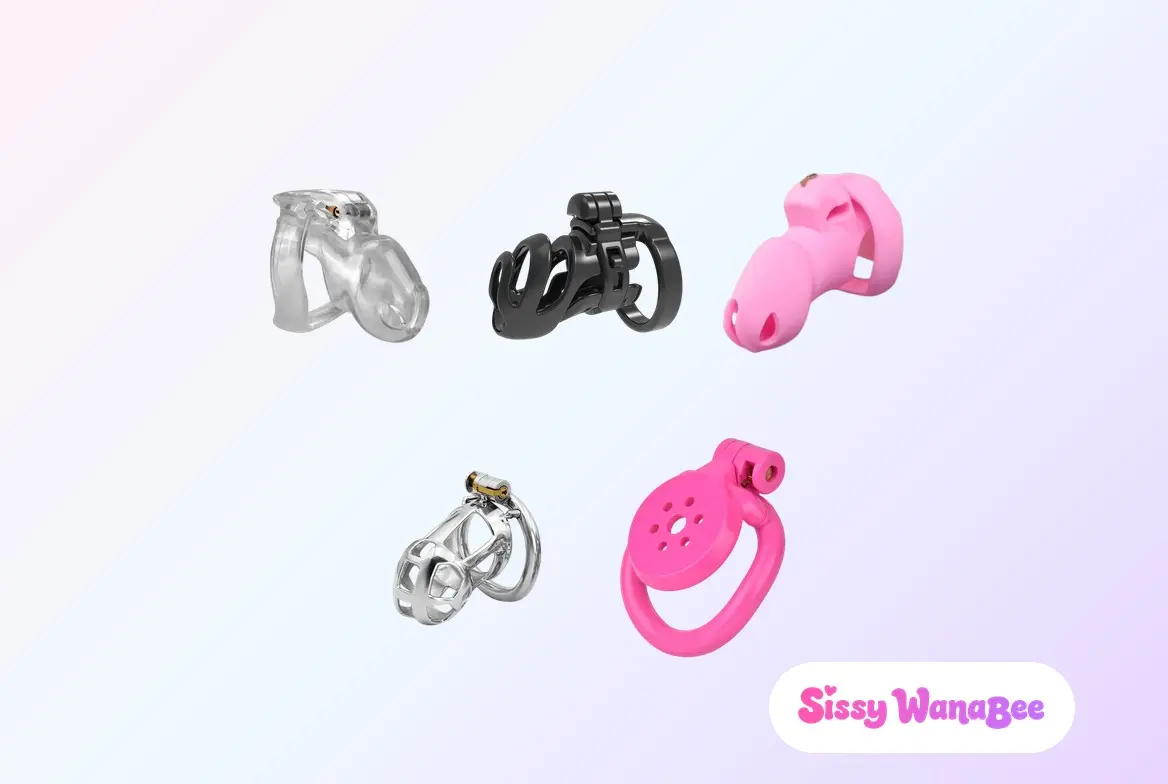
Once it arrives, the first evening has a technique to it, and getting that right matters more than anything you paid for.
One Hour, Sitting Down
Before another shop tab opens, sissy, do this for me tonight.
Put on what you already own. Then sit upright at a table, spine straight, for one full hour, and do not touch yourself once. Not through the fabric, not to adjust, not to check. An hour is nothing. An hour is also long enough for your body to tell you the truth about what it can actually live in, which is information no product page will ever sell you.
If you own nothing yet, do the plain version instead: take a tape measure, find your hip circumference where a waistband would sit, write the number down, and leave it written for a week before you buy anything at all. Good girl. The wanting will still be there on Friday. That is rather the point of it.
Frequently Asked Questions
Were chastity belts real in the Middle Ages?
Essentially, no. The British Museum says of surviving examples that 'the great majority' were probably made in the eighteenth and nineteenth centuries 'as curiosities for the prurient, or as jokes for the tasteless', and the famous Cluny belt attributed to Catherine de' Medici was dated to the early 1800s when its metal was tested. The scholar Albrecht Classen found no medieval sermon, legal or didactic text that mentions one. The full story is in our guide to what chastity actually is.
What is a modern chastity belt actually for?
Security that does not depend on your willpower. A cage can be slipped out of while it stays locked, because it anchors on a ring behind the scrotum. A belt anchors on the waist and hips, so the whole device has to come off as one piece, and it cannot without the key. If escape has genuinely been a problem in your practice, that is what a belt solves. If it has not, a belt is solving a problem you do not have.
Can you wear a chastity belt under normal clothes?
Makers say yes, and I would treat that as a claim rather than a fact. A belt is a steel band around your hips plus a strap or band between your legs, which is considerably more object than a cage sitting at the front of the body. Nobody has published anything I would call evidence either way, so the honest answer is that it depends on the belt, the clothes and how closely anyone is looking.
How long does a chastity belt take to arrive?
Longer than you think. An off-the-shelf belt ships in days like anything else, but a made-to-measure steel one takes weeks at the very least, and a fully custom fit can run to two or three months. Most serious sellers quote and build only after they have your measurements, so add the measuring step to whatever number you are told. An off-the-shelf cage, by comparison, arrives in days.
Do chastity belts come with a spare key?
Reputable makers supply more than one key, and you should confirm it before you buy. This is a safety question rather than a convenience one: the documented emergencies in this practice are key-availability failures, including a case where a man had to be cut out of a titanium device after losing his keys. Agree with your keyholder where the spare lives and how you would cut the device off if it came to that, before the first lock ever closes.
Is a belt harder to escape than a cage?
Yes, mechanically, and that is the whole argument for one. The device anchors on the skeleton rather than on the body part it encloses, so there is nothing to slip out of. Long-term wearers hold that only a full belt or a locked Prince Albert piercing are genuinely inescapable. That is a statement about mechanics and not about safety, and neither device is safer than the other in any way anybody has actually measured.
What do I do if something hurts?
Take it off. Numbness, tingling, coldness, a colour change, sharp pain or swelling that does not settle all mean the device comes off immediately, whichever device you are wearing. Then look at the fit, because fit is usually what went wrong. If it has not settled once you are out of it, get it looked at properly rather than researching it at three in the morning.